
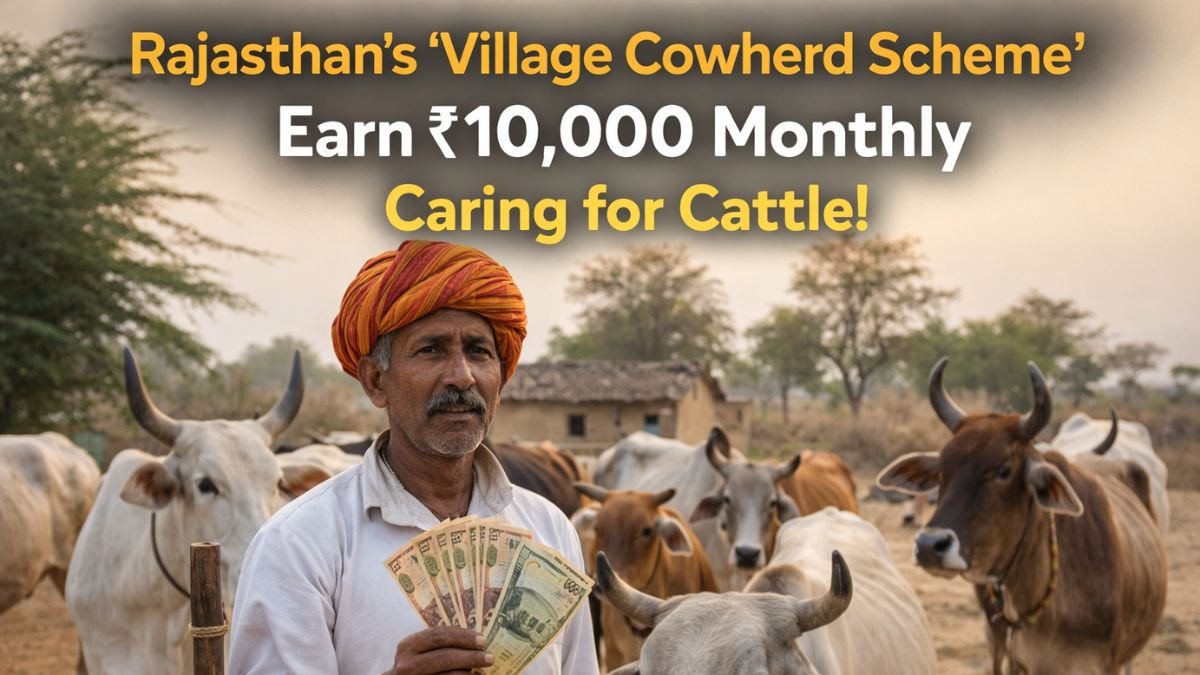
The Rajasthan government has introduced an innovative rural initiative called the “Village Cowherd Scheme” (Gaon Gwala Yojana) to promote cattle protection and improve the management of grazing land.
This scheme aims to address multiple rural challenges at once—such as stray cattle issues, unemployment among youth, and encroachment on common pasture land.
Under this plan, each village will appoint a dedicated cowherd responsible for managing and safeguarding the village’s cattle population. In return, the selected individual will receive a fixed monthly honorarium.
What Is the Village Cowherd Scheme?
The Village Cowherd Scheme is a government initiative designed to ensure systematic care of cattle in rural areas. It focuses on:
- Protecting livestock (especially cows)
- Preventing stray cattle problems
- Ensuring proper use of village grazing (pasture) land
- Generating employment opportunities for rural youth
The scheme has been launched on a pilot basis in Ramganjmandi (Kota district), where 14 cowherds have already been appointed. The government plans to expand it across all villages in Rajasthan in a phased manner.
Duties and Responsibilities of the Cowherd
The appointed cowherd will play a key role in managing the village’s cattle. Their daily responsibilities include:
- Collecting cattle from different households every morning
- Taking them to designated grazing (gochar) land
- Monitoring and caring for the animals throughout the day
- Ensuring their safety from accidents or theft
- Returning them safely to their owners by evening
This structured system is expected to significantly reduce the number of stray cattle roaming freely in villages and nearby roads.
Monthly Salary and Financial Support
Under the scheme, each cowherd will receive a monthly honorarium of ₹10,000.
To ensure smooth financial operations:
- A village-level committee will be formed
- The committee will include local representatives and donors
- It will manage payments and oversee implementation
- Panchayat-level officials, especially patwaris, will monitor the scheme
Although the exact number of cattle assigned to each cowherd has not yet been finalized, guidelines are expected soon.
Key Objectives of the Scheme
The scheme has several important goals:
1. Cattle Protection
Organized grazing ensures that cattle are not abandoned or exposed to unsafe conditions. It also helps prevent illegal activities involving livestock.
2. Employment Generation
The scheme creates a stable income opportunity for rural youth, helping reduce unemployment in villages.
3. Prevention of Encroachment
Regular use of grazing land discourages illegal encroachment, preserving it for its intended purpose.
4. Better Resource Utilization
Proper management of pasture land ensures that cattle have sufficient fodder and that natural resources are used efficiently.
Impact on Rural Areas
Rural areas have long faced issues such as stray cattle and shrinking grazing land. The Village Cowherd Scheme addresses both problems simultaneously.
If implemented effectively, the scheme can:
- Reduce road accidents caused by stray animals
- Support livestock-based livelihoods
- Strengthen traditional cattle-rearing practices
- Serve as a model for other states in India
The initiative reflects a balanced approach to rural development by combining livestock management, employment, and land conservation.
The Village Cowherd Scheme is a forward-thinking initiative by the Rajasthan government that tackles multiple rural challenges through a single structured system.
By appointing dedicated cowherds and ensuring financial support, the scheme promotes cattle welfare, creates jobs, and protects grazing land.
If successfully implemented across the state, it has the potential to transform rural livestock management and inspire similar programs nationwide.
FAQs
1. What is the Village Cowherd Scheme?
It is a Rajasthan government initiative where one cowherd is appointed in each village to manage and care for cattle.
2. How much salary does a cowherd receive?
Each cowherd is paid a monthly honorarium of ₹10,000.
3. Where has the scheme been launched initially?
The scheme started in Ramganjmandi (Kota district) and will expand across Rajasthan in phases.