
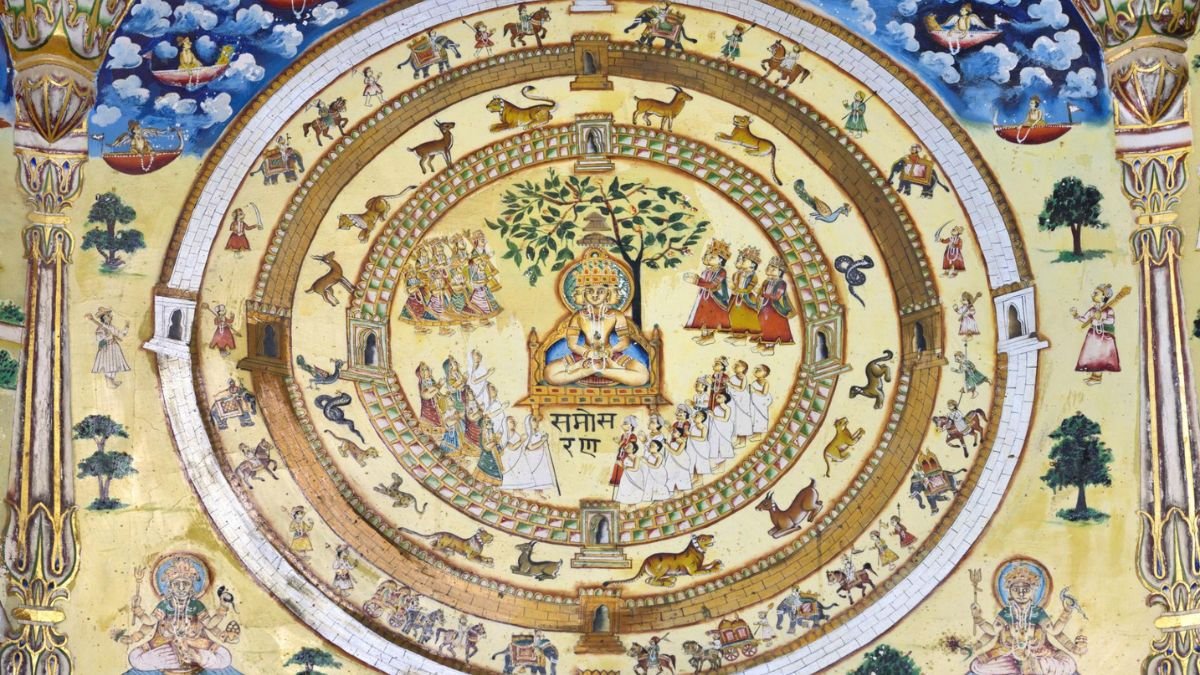
Sambhavnath is revered as the third Tirthankara in Jainism, one of the world’s most ancient religious traditions. A Tirthankara, meaning “Ford Maker,” is a spiritual teacher who shows the path to liberation (moksha) by crossing the river of worldly existence (samsara) and guiding others to do the same.
Sambhavnath occupies a significant place in Jain cosmology as one of the 24 Tirthankaras of the current time cycle (Avasarpini). His life story, virtues, and teachings continue to inspire millions of Jain followers across the world.
Historical and Mythological Background
Birth and Lineage
According to Jain scriptures, Sambhavnath was born in the ancient city of Shravasti (present-day Uttar Pradesh, India). His father was King Jitari and his mother was Queen Sena. His birth is described in Jain texts as an auspicious and divine event, marked by celestial celebrations and signs of greatness.
Jain tradition places his life in a remote, mythic time period when human lifespans were extraordinarily long. Although modern historians do not assign specific historical dates to early Tirthankaras, within Jain cosmology, Sambhavnath lived millions of years ago during the descending half of the time cycle.
Meaning of the Name “Sambhavnath”
The name “Sambhava” signifies “possibility” or “auspiciousness.” It reflects the noble qualities and spiritual potential that he embodied. The suffix “Nath” means “lord” or “spiritual master.” Together, Sambhavnath can be interpreted as “The Lord of Auspicious Possibility.”
This name symbolizes hope — the possibility of liberation for all beings through right conduct and right knowledge.
Symbol and Iconography
Each Tirthankara is associated with a distinct emblem (Lanchhana) that helps devotees identify them in temples and art.
- Emblem (Lanchhana): Horse
- Color: Golden
- **Tree of Enlightenment (Kevala Vriksha): Sala Tree
- Yaksha: Trimukha
- Yakshi: Duritari
In temple idols, Sambhavnath is usually depicted seated in padmasana (lotus posture) or standing in kayotsarga (meditative standing posture). The horse symbol is often carved beneath the idol.
The Life of Sambhavnath
Early Life as a Prince
Sambhavnath was born into royalty and enjoyed a life of luxury and privilege. However, like other Tirthankaras, he eventually realized the impermanence of worldly pleasures. Witnessing the transient nature of life led him to develop deep detachment (vairagya).
Renunciation
At an appropriate time, he renounced his kingdom, wealth, and family life to pursue spiritual awakening. Renunciation (diksha) is a key event in every Tirthankara’s life, symbolizing the ultimate commitment to self-realization.
After renouncing worldly life, he practiced intense meditation and austerities.
Attainment of Kevala Jnana (Omniscience)
Through rigorous penance and spiritual discipline, Sambhavnath attained Kevala Jnana, or infinite knowledge. In Jain philosophy, this is the state of complete and perfect awareness, free from karmic bondage.
This enlightenment marks the moment when a soul becomes a Tirthankara — capable of establishing a fourfold Jain community (monks, nuns, laymen, and laywomen).
Teachings and Philosophy
Jainism is founded on core principles that all Tirthankaras taught, including Sambhavnath:
1. Ahimsa (Non-Violence)
Non-violence is the central pillar of Jainism. Sambhavnath emphasized compassion toward all living beings — humans, animals, insects, and even microscopic life.
2. Satya (Truthfulness)
Speaking truth in a way that does not harm others is essential to spiritual growth.
3. Asteya (Non-Stealing)
Taking only what is willingly given is a moral obligation.
4. Brahmacharya (Celibacy/Chastity)
Self-control over desires is necessary to purify the soul.
5. Aparigraha (Non-Attachment)
Detachment from material possessions and emotional bonds leads to liberation.
These principles collectively form the ethical foundation of Jain life.
Establishment of the Jain Sangha
After attaining omniscience, Sambhavnath delivered sermons (divya dhvani) that were understood by people of all languages. He organized followers into a structured community:
- Monks (Sadhus)
- Nuns (Sadhvis)
- Laymen (Shravakas)
- Laywomen (Shravikas)
This structure ensured the preservation and propagation of Jain teachings.
Nirvana (Liberation)
Shikharji, also known as Sammed Shikhar, is considered one of the holiest pilgrimage sites in Jainism. According to tradition, Sambhavnath attained Nirvana (moksha) at this sacred mountain.
Nirvana signifies the complete liberation of the soul from the cycle of birth and death.
Importance of Sambhavnath in Jain Tradition
1. Role in the Lineage of Tirthankaras
As the third Tirthankara, Sambhavnath continues the spiritual lineage after Rishabhanatha (the first) and Ajitanatha (the second). Each Tirthankara revives Jain teachings during times when they have faded.
2. Moral and Spiritual Inspiration
His life demonstrates:
- The impermanence of worldly pleasures
- The transformative power of renunciation
- The path of discipline leading to omniscience
3. Pilgrimage and Worship
Temples dedicated to Sambhavnath are found across India, especially in major Jain pilgrimage centers. Devotees offer prayers, perform rituals, and meditate before his idol to cultivate inner peace and spiritual awareness.
Philosophical Significance
Jain cosmology describes time as cyclical, divided into ascending and descending halves. In every cycle, 24 Tirthankaras appear. Sambhavnath’s existence affirms:
- The eternal nature of the soul
- The universality of karmic law
- The possibility of liberation for all beings
His teachings emphasize personal responsibility — liberation depends on individual effort, not divine intervention.
Sambhavnath in Art and Architecture

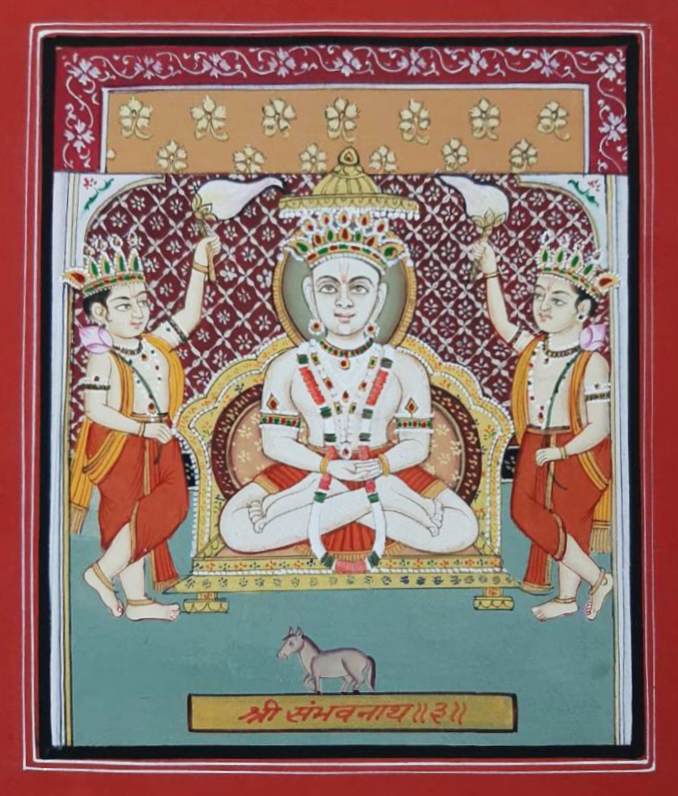

Jain art portrays Sambhavnath with serene facial features symbolizing inner peace. His golden complexion reflects purity and spiritual radiance.
In temple architecture, his emblem — the horse — is engraved below the pedestal, ensuring correct identification among the 24 Tirthankaras, who otherwise appear similar in meditative posture.
Relevance in Modern Times
Though Sambhavnath lived in ancient times, his teachings remain profoundly relevant:
- In an age of violence, Ahimsa promotes peace.
- In a consumer-driven world, Aparigraha teaches simplicity.
- In times of moral uncertainty, Truth and self-discipline offer clarity.
Modern Jain communities celebrate festivals, observe fasting rituals, and conduct scriptural studies to honor the teachings of all Tirthankaras, including Sambhavnath.
Core Lessons from Sambhavnath’s Life
- True happiness lies beyond material wealth.
- Discipline and self-control purify the soul.
- Every being has the potential to achieve liberation.
- Compassion is the highest form of spirituality.
- Liberation is attained through personal effort and right conduct.
Bottom Line
Sambhavnath, the third Tirthankara of Jainism, represents the timeless possibility of spiritual awakening. Born into royalty yet choosing renunciation, he demonstrated that liberation is attainable through discipline, compassion, and detachment. His teachings continue to guide millions toward ethical living and spiritual growth.
Through his life, Jainism reaffirms its central message: every soul is inherently pure and capable of attaining moksha. Sambhavnath stands as a beacon of hope, reminding humanity that liberation is not reserved for a few — it is possible for all.
Frequently Asked Questions
1. Who was Sambhavnath?
Sambhavnath was the third Tirthankara of Jainism who attained omniscience and guided others toward liberation.
2. What is the symbol of Sambhavnath?
His emblem is the horse, which appears beneath his idol in Jain temples.
3. Where was Sambhavnath born?
He was born in the ancient city of Shravasti to King Jitari and Queen Sena.
4. Where did Sambhavnath attain Nirvana?
He attained Nirvana at Shikharji (Sammed Shikhar) in present-day Jharkhand, India.
5. What did Sambhavnath teach?
He emphasized non-violence, truthfulness, non-stealing, celibacy, and non-attachment as the path to liberation.