
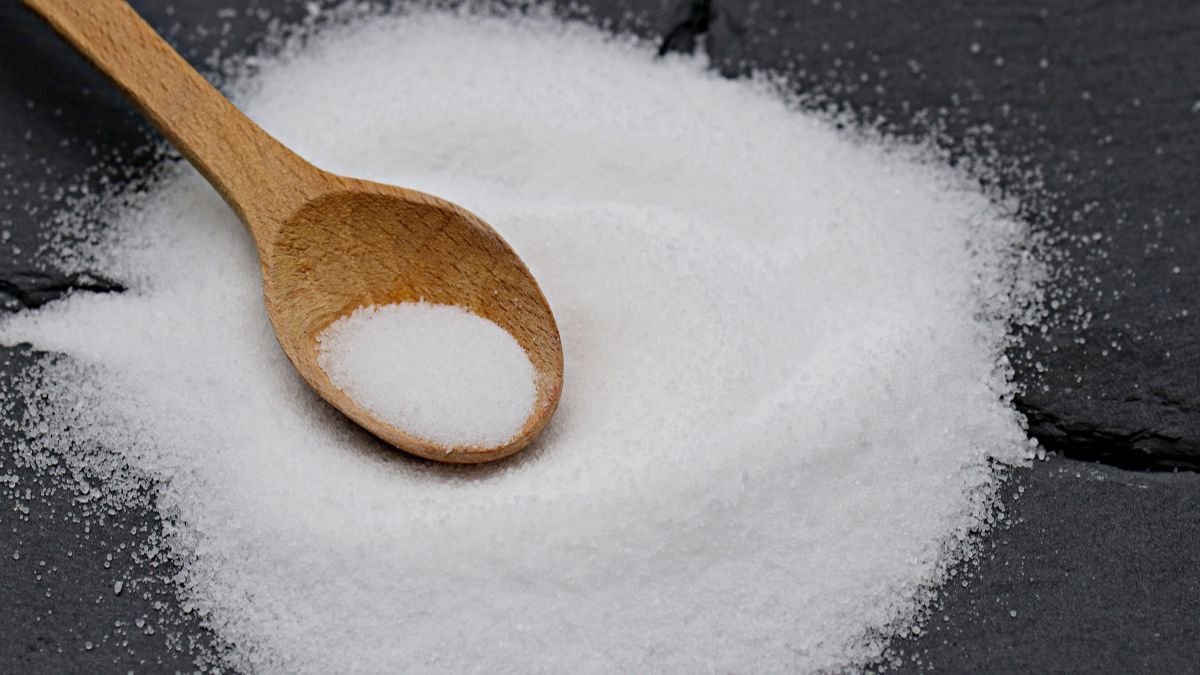
Global sugar markets have experienced a sharp price decline due to surplus supply, particularly from Brazil. According to a report by ICRA Limited, international sugar prices have fallen significantly over the past year, reflecting the growing imbalance between supply and demand in global markets.
Despite this global price drop, the Indian sugar industry remains stable, supported by steady domestic demand, increased sugarcane availability, and government policies related to ethanol production and pricing.
Global Sugar Prices Decline Sharply
The ICRA report highlights a notable fall in global sugar prices during Sugar Year (SY) 2026, primarily driven by excess supply from Brazil, which is one of the world’s largest sugar producers and exporters.
In February 2026, raw sugar prices fell to USD 313 per metric tonne, compared to USD 445 per metric tonne in February 2025. Similarly, white sugar prices dropped to USD 408 per metric tonne, down from USD 532 per metric tonne during the same period last year.
Global Sugar Price Comparison
| Type of Sugar | February 2025 | February 2026 |
|---|---|---|
| Raw Sugar | USD 445 per tonne | USD 313 per tonne |
| White Sugar | USD 532 per tonne | USD 408 per tonne |
This decline indicates a significant price correction caused by the surplus supply entering global markets.
Brazil’s Surplus Production Influencing Global Markets
Brazil has played a major role in pushing global sugar prices lower. Strong production levels and higher exports from the country have increased global supply, creating downward pressure on prices.
According to the report, global sugar production for SY2025–SY2026 is estimated at 189.3 million metric tonnes, which represents an increase of about 5 percent compared to the previous year.
Meanwhile, global sugar consumption is expected to reach 178.1 million metric tonnes, which is approximately 1 percent higher year-on-year.
The large difference between production and consumption has resulted in oversupply in international markets, contributing to the fall in prices.
Premium Between Raw and White Sugar
Even though prices have fallen overall, the price difference between white and raw sugar has slightly increased.
In February 2026, the premium of white sugar over raw sugar reached USD 95 per metric tonne, compared with USD 87 per metric tonne in February 2025.
This premium reflects the additional refining costs and demand for refined sugar in various international markets.
Stable Outlook for the Indian Sugar Industry
Despite global volatility, India’s sugar sector continues to show stability due to strong domestic demand and balanced supply conditions.
According to the Indian Sugar Mills Association’s third advance estimates, gross sugar production in SY2026 is projected to increase by 9.4 percent, reaching 32.41 million metric tonnes, compared with 29.6 million metric tonnes in the previous year.
However, not all sugar produced will enter the domestic market. Approximately 3.1 million metric tonnes of sugar are expected to be diverted for ethanol production, which reduces excess supply.
As a result, net sugar production is estimated at 29.3 million metric tonnes.
Domestic Demand and Stock Levels
India’s domestic consumption of sugar is expected to remain strong.
- Domestic consumption: 28.3 million metric tonnes
- Exports: 0.7 million metric tonnes
Based on these estimates, the closing sugar stock is expected to reach around 5.6 million metric tonnes, which is equivalent to about two months of domestic consumption.
This level of stock is considered comfortable and indicates a balanced demand-supply situation in the country.
Profitability Outlook for Sugar Mills
ICRA expects the operating margins of integrated sugar mills to remain stable during the financial year 2026.
Operating margins are projected to stay within the range of 10 to 10.5 percent, compared to 9.6 percent in the previous financial year.
Profitability for sugar companies is supported by several factors, including:
- Improved availability of sugarcane
- Stable domestic sugar prices
- Strong performance of distillery operations
However, margins may remain stable rather than increase significantly because sugarcane prices have risen, while ethanol prices have remained largely unchanged.
Revenue growth for integrated sugar mills is expected to remain moderate at around 5 to 8 percent in FY2026.
Progress in India’s Ethanol Blending Program
India has also made significant progress in its ethanol blending program, which aims to reduce fuel imports and promote renewable energy.
During the first three months of Ethanol Supply Year (ESY) 2026, the country achieved an ethanol blending ratio of 19.98 percent.
A total of 239 crore litres of ethanol were blended during this period, including 59.2 crore litres in January 2026 alone.
This program continues to play a crucial role in managing sugar supply and improving the financial stability of sugar mills.
Increase in Sugarcane Prices
The government has also revised the Fair and Remunerative Price (FRP) for sugarcane.
For SY2026, the FRP has been increased by ₹15 to ₹355 per quintal for sugarcane with a basic recovery rate of 10.25 percent.
In Uttar Pradesh, the State Advised Price (SAP) has also been raised:
- ₹400 per quintal for early-maturing varieties
- ₹390 per quintal for normal varieties
These price revisions aim to ensure fair compensation for farmers while maintaining stability in the sugar sector.
Conclusion
Global sugar prices have fallen significantly due to excess production and strong exports from Brazil, leading to an oversupply in international markets. However, the Indian sugar industry remains stable, supported by strong domestic demand, ethanol diversion policies, and balanced supply conditions.
With production expected to rise and ethanol blending continuing to expand, the outlook for India’s sugar sector in SY2026 appears stable despite the challenges in global markets.
FAQs
Why have global sugar prices fallen in 2026?
Global sugar prices have dropped mainly due to surplus production and increased exports from Brazil, leading to oversupply in the market.
What is India’s projected sugar production for SY2026?
India’s gross sugar production is estimated at 32.41 million metric tonnes, according to the Indian Sugar Mills Association.
How does ethanol blending help the sugar industry?
Ethanol blending allows part of the sugar output to be diverted to fuel production, reducing excess supply and supporting sugar mill profitability.