
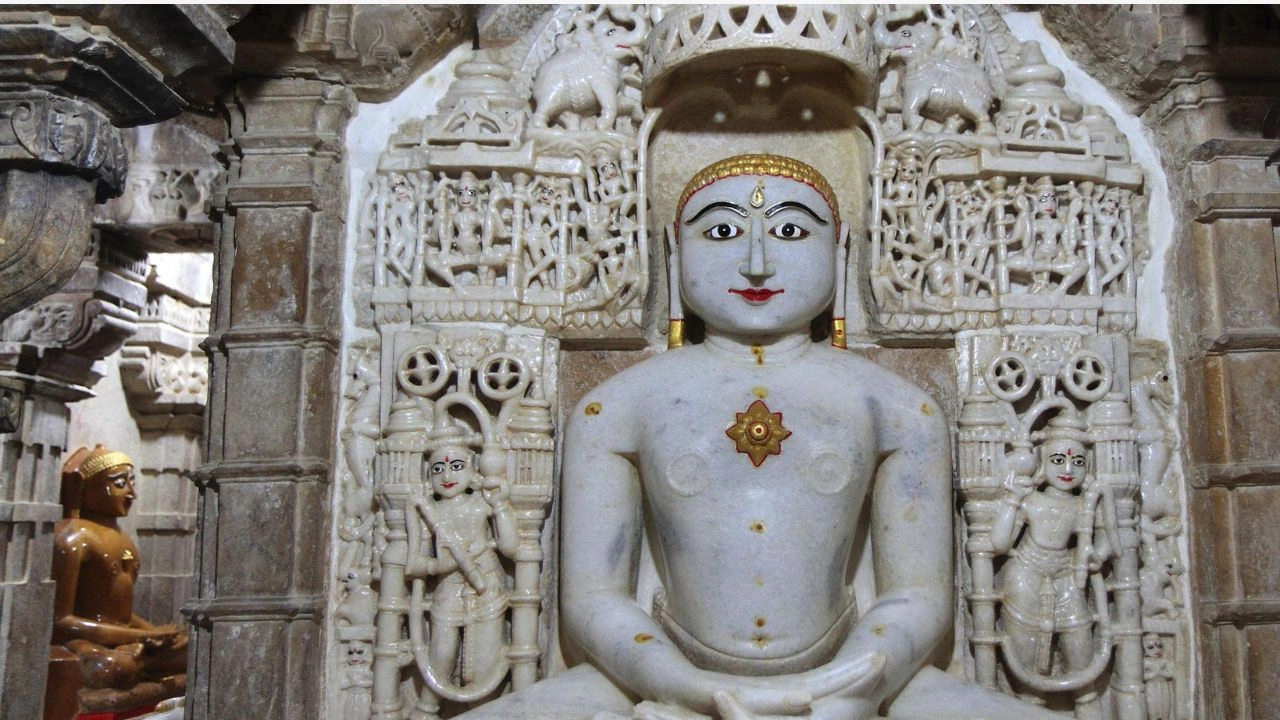


Adinath, also known as Rishabhanatha, holds a foundational place in Jain tradition as the first Tirthankara of Jainism. Revered as the pioneer who reestablished the path of spiritual liberation in the current time cycle, Adinath is considered the originator of many essential aspects of human civilization according to Jain scriptures. His life story blends philosophy, symbolism, spirituality, and ethical guidance, making him one of the most significant figures in Jain religious history.
This detailed introduction to Adinath, the First Tirthankara of Jainism, explores his historical and spiritual importance, teachings, symbolism, iconography, temples, and lasting influence on Jain philosophy and practice.
Who Is Adinath in Jainism?
The Meaning of the Name Adinath
The name Adinath literally means “First Lord.” He is also widely known as Rishabhanatha or Rishabhadeva. In Jain cosmology, a Tirthankara is a spiritual teacher who rediscovers and spreads the path to liberation during a specific time cycle. As the first Tirthankara of Jainism, Adinath occupies the earliest position among the 24 Tirthankaras recognized in the current era.
Role as the First Tirthankara
According to Jain tradition, Adinath was born at a time when humanity lacked structured social systems. He is believed to have introduced essential skills and societal frameworks such as agriculture, cooking, writing, crafts, and trade. In this way, the life of Adinath bridges both spiritual enlightenment and the establishment of organized human society.
Birth and Early Life of Rishabhanatha
Royal Origins
Jain scriptures describe Adinath as being born into a royal family in Ayodhya. His father was King Nabhi and his mother was Queen Marudevi. His birth is celebrated as an auspicious event marked by divine signs and symbolic dreams.
Establishment of Social Order
Before renouncing worldly life, Adinath is believed to have ruled as a righteous king. During this period, he is said to have organized human communities and introduced structured occupations. These contributions are central to the Jain narrative about the First Tirthankara of Jainism.
Renunciation and Spiritual Awakening
Decision to Renounce the World
After fulfilling his worldly responsibilities, Adinath renounced his kingdom in pursuit of spiritual liberation. His renunciation symbolizes detachment, a core principle of Jain philosophy.
Attainment of Kevala Jnana
Through intense meditation and ascetic practices, Adinath attained Kevala Jnana, or omniscience. This state represents complete knowledge and spiritual awakening. After attaining enlightenment, he began teaching the path of liberation, known as the Jain dharma.
Teachings of Adinath
Core Principles of Jain Philosophy
The teachings of Adinath, the First Tirthankara of Jainism, revolve around fundamental Jain principles:
• Ahimsa (non violence)
• Satya (truthfulness)
• Asteya (non stealing)
• Brahmacharya (celibacy or self control)
• Aparigraha (non attachment)
These principles form the ethical foundation of Jain spiritual practice.
Emphasis on Non Violence
Ahimsa stands as the central doctrine in the teachings of Adinath. Non violence extends not only to humans but to all living beings. This philosophy deeply influences Jain dietary practices and lifestyle choices.
Symbolism and Iconography of Adinath
The Bull Emblem
Each Tirthankara has a distinctive symbol. The emblem associated with Adinath is the bull. This symbol appears beneath his idol in temples and artwork, helping devotees identify him among other Tirthankaras.
Iconographic Features
Adinath is often depicted in a meditative posture, either seated in padmasana or standing in kayotsarga position. His calm expression reflects spiritual serenity and detachment from worldly attachments.
Major Temples Dedicated to Adinath


Several prominent Jain temples are dedicated to Adinath across India. Among the most notable are:
• The temples at Palitana in Gujarat
• The Ranakpur Jain Temple in Rajasthan
• The Dilwara Temples in Mount Abu
These sacred sites highlight the architectural beauty and devotional significance associated with the First Tirthankara of Jainism.
Table: Key Facts About Adinath
| Aspect | Details |
|---|---|
| Other Names | Rishabhanatha, Rishabhadeva |
| Position | First of 24 Tirthankaras |
| Emblem | Bull |
| Birthplace | Ayodhya |
| Core Teaching | Ahimsa and detachment |
| Attainment | Kevala Jnana |
This table summarizes essential information regarding Adinath, the First Tirthankara of Jainism.
Historical and Philosophical Significance
Foundation of Jain Ethical Framework
Adinath’s teachings laid the groundwork for Jain ethical philosophy. His emphasis on discipline, restraint, and compassion shaped the religious structure followed by later Tirthankaras.
Influence on Jain Culture
Jain festivals, rituals, and scriptures frequently reference Adinath. His life story is recounted in sacred texts such as the Kalpa Sutra and other Jain literature.
Relevance in Modern Times
Ethical Living in Contemporary Society
The principles introduced by Adinath remain relevant today. Non violence, sustainability, minimalism, and ethical conduct align with modern concerns about environmental responsibility and peaceful coexistence.
Inspiration for Spiritual Seekers
For many followers, Adinath represents the possibility of spiritual awakening through discipline and inner reflection. His life serves as a model of balance between worldly responsibility and spiritual aspiration.
Philosophical Themes Associated With Adinath
The narrative of Adinath highlights recurring Jain themes:
• Cyclical time and recurring Tirthankaras
• Liberation through self effort
• Karma and spiritual purification
• Renunciation as a path to enlightenment
These concepts remain central to Jain metaphysics and religious practice